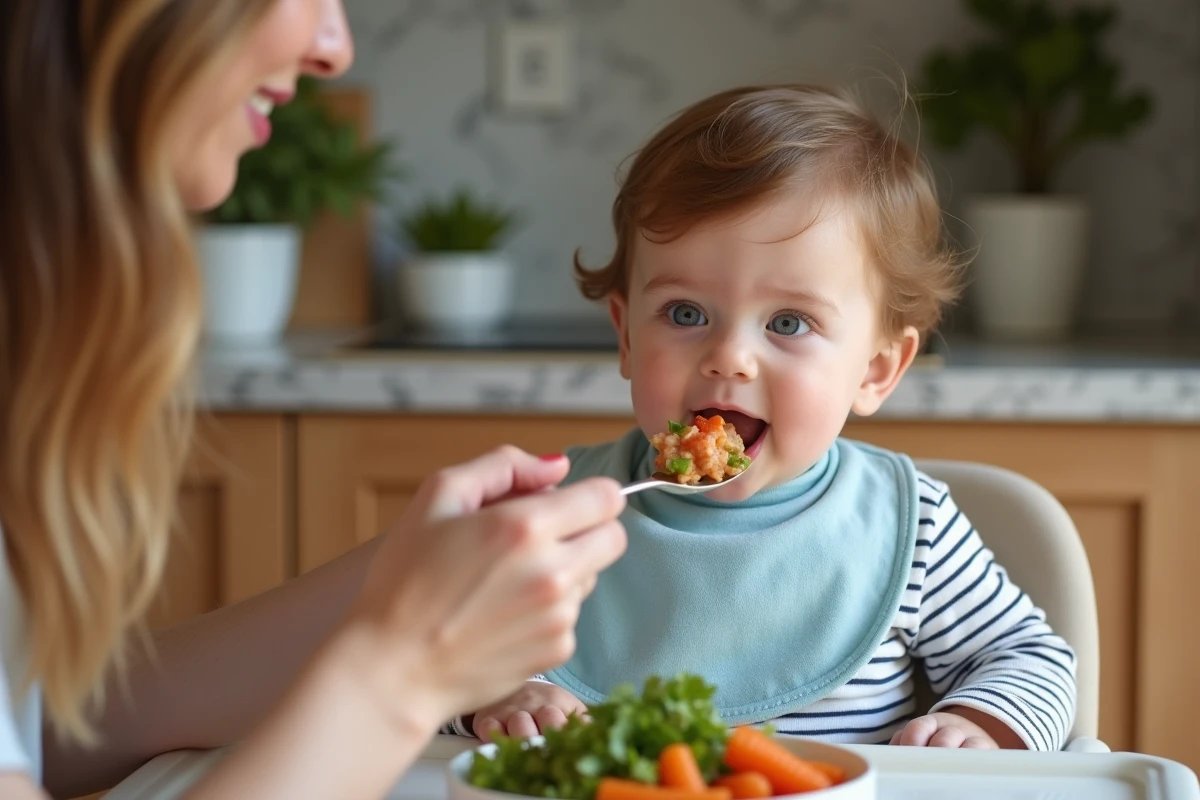
The numbers don’t lie: in many households, bacon bits make their way onto plates well before the recommended age. However, caution has never been more necessary. Between official recommendations and common practices, the question of introducing bacon bits to babies deserves to be addressed directly.
Charcuterie and Infant Nutrition: What the Recommendations Say
Addressing complementary feeding also quickly confronts the role of charcuterie in the menus of young children. The High Council of Public Health (HCSP) is clear: charcuterie, due to its high salt, nitrite, and fat content, has no place in the regular diet of young children. Even white ham, sometimes tolerated, should be introduced very sparingly, and only if selected without additives or excess salt.
Introducing a charcuterie product to a child thus requires heightened attention. Recommendations highlight the acquisition of chewing skills and the ability to swallow pieces, around 12 months, as prerequisites before offering, exceptionally, a few well-cooked and defatted bacon bits. The frequency remains very limited: lean proteins (chicken, turkey, veal) along with a wide variety of fruits and vegetables should dominate the diet to build a solid nutritional foundation.
Here are the points to keep in mind before considering bacon bits:
- Only select products with a short and readable ingredient list.
- Set aside smoked bacon bits, which are too salty or packed with preservatives.
- Always keep an eye on the updated recommendations from the HCSP to avoid any excess salt or additives.
For those who want to delve deeper into the topic, bacon bits for babies on Le Paris des Lardons offers a detailed analysis, in line with national nutritional guidelines. Complementary feeding is never a race: it takes time, vigilance, and the support of health professionals, not to mention careful observation of the child’s reactions.
At What Age Can Bacon Bits Be Safely Offered to Babies?
The introduction of bacon bits to young children is not done on a whim. Guidelines regarding complementary feeding are clear: charcuterie is an exception, and this remains true for bacon bits. Before the age of one, a baby’s renal system is not ready to handle the salt and additives typical of these processed products.
After the first birthday, the horizon broadens, but vigilance remains essential. The green light only comes on if the child has mastered chewing and can swallow without difficulty. For most, this occurs between 15 and 18 months, and only within the context of a varied diet, where fruits, vegetables, and lean proteins take center stage. Charcuterie should only make a very occasional appearance.
Here are the two rules to follow if you plan to introduce bacon bits:
- Ensure that the child is comfortable with pieces and chewing before considering this type of food.
- Reserve bacon bits for a rare tasting: a few well-cooked and defatted crumbs, during an exceptional meal, no more.
Quality must take precedence. Opt for natural bacon bits, without additives, far from excess fat. Lean proteins should remain the preferred choice during meals. Public health recommendations all point in the same direction: charcuterie, even in small quantities, should maintain a minor role in a child’s diet if we want to preserve nutritional balance.

Choosing and Preparing Bacon Bits to Preserve Your Child’s Health
When it comes to bacon bits, nothing should be left to chance. The ideal? A simple product, sourced from a short supply chain, without preservatives or flavor enhancers. Industrial charcuterie often combines salt, additives, and artificial smoking, all elements that a young body does not need. Scrutinize the ingredient list: the fewer elements it contains, the better.
Preparation is just as important as product choice. Remove the rind and visible fat, then, to limit salt and lipids, pre-cook the bacon bits in water before draining them well. You can then incorporate them in small amounts, crumbled, into a vegetable puree, mashed potatoes, or a preparation based on milk and mild cheeses.
Keep these precautions in mind during preparation:
- Prefer bacon bits made from lean meats.
- Don’t multiply occasions: bacon bits remain an exceptional food within a varied and balanced diet.
- Always pair bacon bits with fiber and vitamin-rich fruits or vegetables.
Adding flavor without falling into excess salt is possible: rely on aromatic herbs or a few mild spices like bay leaf or turmeric. Be mindful of the size of the pieces; blending may sometimes be necessary to prevent any choking risk. Transparency, balance, and moderation are the only guiding principles that hold true.
Ultimately, bacon bits rarely find their way onto a baby’s plate, and always under supervision. The rest of the time, focusing on variety, simplicity, and patience allows for the best possible start for the child. Because at that age, discovering flavors doesn’t need salty shortcuts.